Lena is part of a new wave of advocacy. Not the old way—the tearful interview, the somber PSA. She is part of The Unbroken , a campaign founded by survivors for survivors. Their motto is brutal and simple: We don’t want your pity. We want your action.

Survivor stories aren’t just about the past; they are blueprints for a better future. 🌱 Every time a survivor speaks up, the cycle breaks a little more. This month, we honor the courage it takes to tell the truth and the power of awareness campaigns to ensure the next generation is protected.

Awareness campaigns have seized on this. Rather than asking you to fight "human trafficking," they ask you to listen to Chloe’s story. Rather than raising awareness for "opioid abuse," they share Marcus’s three-year journey to sobriety. By humanizing the crisis, survivor stories dissolve the psychological distance that allows apathy to flourish.

Today, Lena stands on a stage in a high school gymnasium. The lights are hot, but she doesn’t flinch. In front of her, five hundred teenagers fidget in plastic chairs, their faces lit by the glow of their phones.

The history of in the 1980s and 1990s Hong Kong film industry. The career achievements of Carina Lau following this event. Share public link

The second one is uncomfortable. It’s raw. But it is also a lifeline.

In the mid-20th century, breast cancer was shrouded in silence and stigma. Diagnosis was rarely discussed openly, leaving patients isolated. The shift occurred when survivors began speaking out publicly, demanding better treatment options and funding.

If you wish to write a legitimate article, I recommend focusing on

Public health campaigns often rely on quantitative data to illustrate the scope of an issue. However, numbers frequently fail to motivate communities on an individual level. This phenomenon, known in psychology as the "identifiable victim effect," suggests that people are far more likely to offer aid or change their behavior when observing the specific plight of a single person rather than a large, abstract group.

Targeting LGBTQ+ youth experiencing mental health crises and suicidal ideation, the "It Gets Better" campaign utilized video testimonials from adult survivors of bullying and systemic rejection. By witnessing happy, successful adults who survived identical teenage struggles, thousands of youth found the psychological resilience to persist. Ethical Considerations: Protecting the Storyteller

The primary of your campaign (e.g., fundraising, policy change, education).

: Include both external challenges (e.g., a natural disaster, illness, or systemic issue) and internal struggles (e.g., fear, loss, or the mental battle to keep going).

Historically, societal narratives have frequently faulted victims for their circumstances. Survivor-led advocacy flips this script. By detailing the grooming processes of traffickers, the psychological traps of abusive relationships, or the barriers to mental health care, survivors re-educate the public on where accountability truly belongs. The Architecture of Impactful Awareness Campaigns

When a survivor shares their truth, they do more than recount a past event; they: ✨ that protects abusers. ✨ Shame the stigma that blames the innocent. ✨ Extend a hand to someone else still suffering in secret.

Founded by a grieving mother after her daughter was killed by a drunk driver, MADD utilized the devastating stories of grieving families to completely rewrite traffic safety laws. Their continuous awareness campaigns shifted the public perception of drunk driving from a minor, excused misstep to a severe criminal act, ultimately saving hundreds of thousands of lives through stricter BAC limits and legal penalties. Navigating the Challenges of Modern Advocacy

Related posts

Carina Lau Rape Uncensored Video [updated] Jun 2026

Lena is part of a new wave of advocacy. Not the old way—the tearful interview, the somber PSA. She is part of The Unbroken , a campaign founded by survivors for survivors. Their motto is brutal and simple: We don’t want your pity. We want your action.

Survivor stories aren’t just about the past; they are blueprints for a better future. 🌱 Every time a survivor speaks up, the cycle breaks a little more. This month, we honor the courage it takes to tell the truth and the power of awareness campaigns to ensure the next generation is protected.

Awareness campaigns have seized on this. Rather than asking you to fight "human trafficking," they ask you to listen to Chloe’s story. Rather than raising awareness for "opioid abuse," they share Marcus’s three-year journey to sobriety. By humanizing the crisis, survivor stories dissolve the psychological distance that allows apathy to flourish.

Today, Lena stands on a stage in a high school gymnasium. The lights are hot, but she doesn’t flinch. In front of her, five hundred teenagers fidget in plastic chairs, their faces lit by the glow of their phones. Carina Lau Rape Uncensored Video

The history of in the 1980s and 1990s Hong Kong film industry. The career achievements of Carina Lau following this event. Share public link

The second one is uncomfortable. It’s raw. But it is also a lifeline.

In the mid-20th century, breast cancer was shrouded in silence and stigma. Diagnosis was rarely discussed openly, leaving patients isolated. The shift occurred when survivors began speaking out publicly, demanding better treatment options and funding. Lena is part of a new wave of advocacy

If you wish to write a legitimate article, I recommend focusing on

Public health campaigns often rely on quantitative data to illustrate the scope of an issue. However, numbers frequently fail to motivate communities on an individual level. This phenomenon, known in psychology as the "identifiable victim effect," suggests that people are far more likely to offer aid or change their behavior when observing the specific plight of a single person rather than a large, abstract group.

Targeting LGBTQ+ youth experiencing mental health crises and suicidal ideation, the "It Gets Better" campaign utilized video testimonials from adult survivors of bullying and systemic rejection. By witnessing happy, successful adults who survived identical teenage struggles, thousands of youth found the psychological resilience to persist. Ethical Considerations: Protecting the Storyteller Their motto is brutal and simple: We don’t want your pity

The primary of your campaign (e.g., fundraising, policy change, education).

: Include both external challenges (e.g., a natural disaster, illness, or systemic issue) and internal struggles (e.g., fear, loss, or the mental battle to keep going).

Historically, societal narratives have frequently faulted victims for their circumstances. Survivor-led advocacy flips this script. By detailing the grooming processes of traffickers, the psychological traps of abusive relationships, or the barriers to mental health care, survivors re-educate the public on where accountability truly belongs. The Architecture of Impactful Awareness Campaigns

When a survivor shares their truth, they do more than recount a past event; they: ✨ that protects abusers. ✨ Shame the stigma that blames the innocent. ✨ Extend a hand to someone else still suffering in secret.

Founded by a grieving mother after her daughter was killed by a drunk driver, MADD utilized the devastating stories of grieving families to completely rewrite traffic safety laws. Their continuous awareness campaigns shifted the public perception of drunk driving from a minor, excused misstep to a severe criminal act, ultimately saving hundreds of thousands of lives through stricter BAC limits and legal penalties. Navigating the Challenges of Modern Advocacy
To Serve Man, with Software

To Serve Man, with Software

I didn’t choose to be a programmer. Somehow, it seemed, the computers chose me. For a long time, that was fine, that was enough; that was all I needed. But along the way I never felt that being a programmer was this unambiguously great-for-everyone career field with zero downsides.

By Jeff Atwood ·
Comments
Here’s The Programming Game You Never Asked For

Here’s The Programming Game You Never Asked For

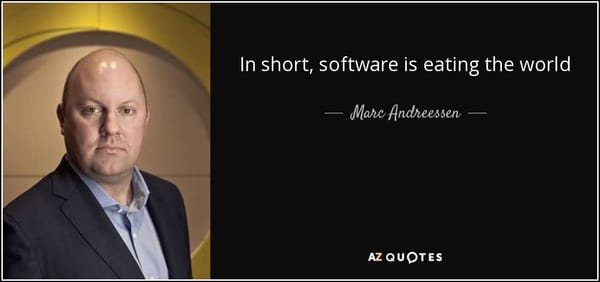
You know what’s universally regarded as un-fun by most programmers? Writing assembly language code. As Steve McConnell said back in 1994: Programmers working with high-level languages achieve better productivity and quality than those working with lower-level languages. Languages such as C++, Java, Smalltalk, and Visual Basic have been credited

By Jeff Atwood ·
Comments
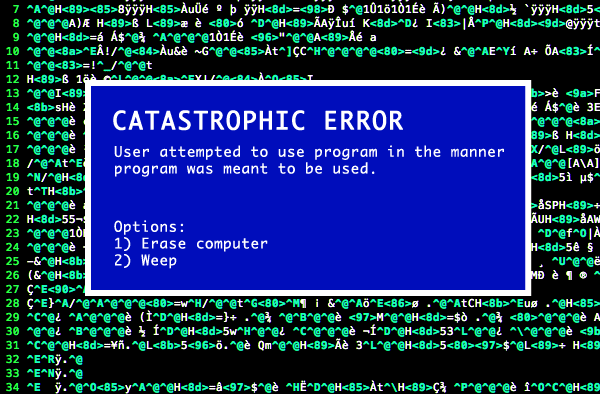
Catastrophic error: User attempted to use program in the manner program was meant to be used. Options 1) Erase computer 2) Weep

Doing Terrible Things To Your Code

In 1992, I thought I was the best programmer in the world. In my defense, I had just graduated from college, this was pre-Internet, and I lived in Boulder, Colorado working in small business jobs where I was lucky to even hear about other programmers much less meet them. I

By Jeff Atwood ·
Comments

Recent Posts

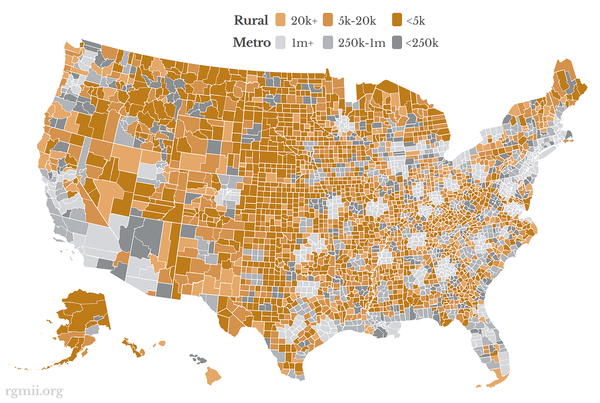
map of the United States via rgmii.org showing all 3,143 counties by rural (gold) / metro (grey) and population

Launching The Rural Guaranteed Minimum Income Initiative

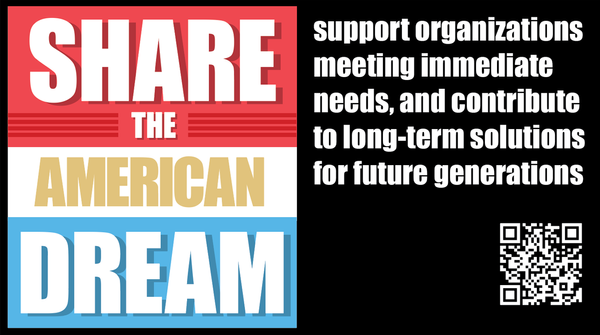
It's been a year since I invited Americans to join us in a pledge to Share the American Dream: 1. Support organizations you feel are effectively helping those most in need across America right now. 2. Within the next five years, also contribute public dedications of time or

By Jeff Atwood ·
Comments
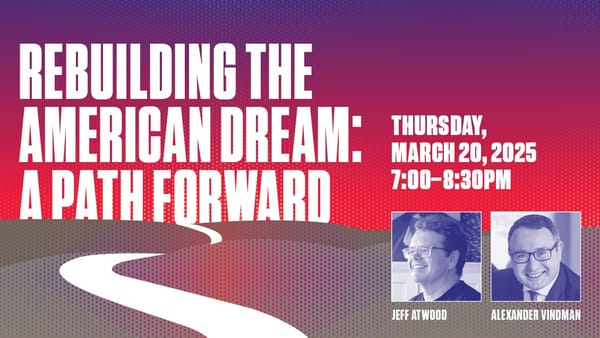
Let's Talk About The American Dream

Let's Talk About The American Dream

A few months ago I wrote about what it means to stay gold — to hold on to the best parts of ourselves, our communities, and the American Dream itself. But staying gold isn’t passive. It takes work. It takes action. It takes hard conversations that ask us to confront

By Jeff Atwood ·
Comments
Stay Gold, America

Stay Gold, America

We are at an unprecedented point in American history, and I'm concerned we may lose sight of the American Dream.

By Jeff Atwood ·
Comments
I’m feeling unlucky... 🎲   See All Posts