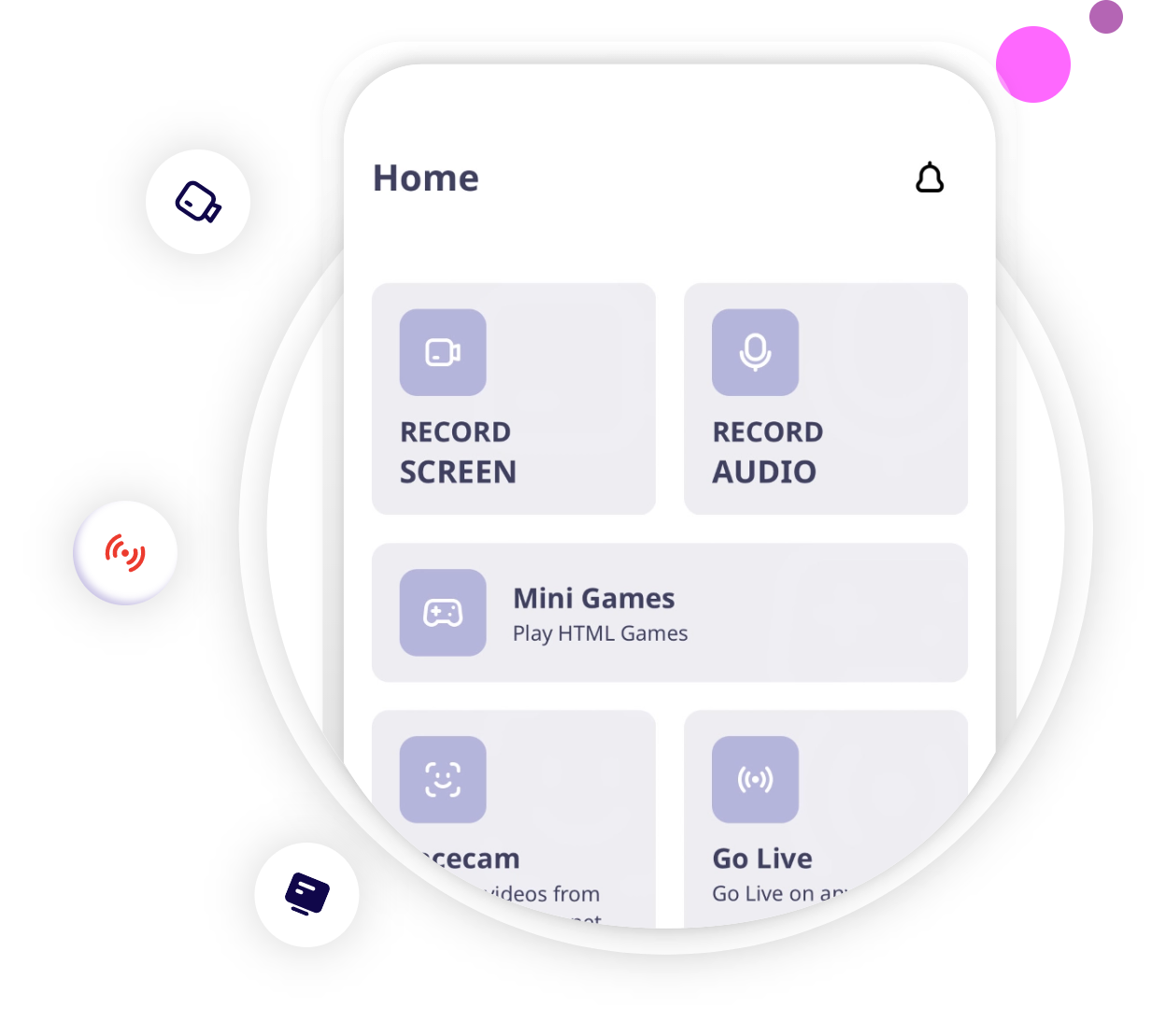
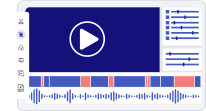
Experience seamless screen recording on your iOS device with our feature-rich iPhone and iPad screen
recorder — completely watermark-free. With a fast-growing community of over 400K+ users, our app is
trusted for its performance, simplicity, and smooth user experience.
Whether you're a gamer, student, educator, or professional, you can easily capture and share your
favorite moments, tutorials, or presentations — all directly from your iPhone or iPad.
Go throw this overview of iPhone Screen Recorder, the most advanced screen-capturing app.
Our iOS Screen Recorder delivers a smooth, intuitive experience built for users
of all levels. With powerful features and a clean design, it sets a new benchmark in mobile screen recording —
whether you're creating tutorials, gameplay clips, or video presentations.
Here's what makes our app a favorite among iPhone and iPad users:
Dr. Anna Lembke, author of Dopamine Nation , argues that streaming platforms and social media have weaponized the same psychological mechanism as slot machines. You don't know whether the next video will be boring, hilarious, infuriating, or heartbreaking. That uncertainty keeps you scrolling.
In the modern era, the lines between our physical lives and our digital experiences have blurred into a single, continuous stream. At the heart of this convergence is , a powerhouse industry that does far more than just "distract" us. It shapes our language, dictates our trends, and provides the cultural glue that connects people across continents.
The (e.g., academic, marketing professionals, general blog readers) A specific word count requirement indian xxx fuck video top
The early 20th century marked the beginning of the entertainment industry as we know it today. The rise of cinema, radio, and television revolutionized the way people consumed entertainment. Movie studios like Hollywood and Bollywood produced iconic films that captivated audiences worldwide. Radio shows and TV programs like "The Jack Benny Program" and "I Love Lucy" became household names, entertaining millions of people.
Smart contracts on distributed ledgers will finally solve the residuals crisis, allowing real-time, transparent micropayments to every contributor every time content is viewed.
The entertainment industry has witnessed a surge in diverse and inclusive content, with more representation of underrepresented groups. Some of the current trends include: That uncertainty keeps you scrolling
The most significant shift in popular media has been the death of the "appointment viewing" model. For decades, traditional networks dictated when and where audiences could engage with content. The rise of streaming giants like Netflix, Disney+, and HBO Max flipped this script, introducing the era of binge-watching and on-demand gratification.
For most of the 20th century, entertainment content followed a top-down model. A handful of major Hollywood studios, television networks, and print publishers acted as cultural gatekeepers. Content was created for the masses, meaning television shows, films, and music had to appeal to broad demographics to succeed. This created a shared cultural lexicon; millions of people watched the same broadcast at the same time, establishing a unified pop-culture conversation.
During the streaming war peak, studios pulled their content from rivals to make it exclusive (e.g., NBC pulling The Office for Peacock). That strategy failed to drive enough sign-ups. Now, studios are re-licensing their libraries to everyone. You can now watch Seinfeld on Netflix again, even though it is owned by Warner Bros. The industry realized that "exclusivity" means "obscurity." To make money, you need your content everywhere. It shapes our language, dictates our trends, and
This public link is valid for 7 days and shares a thread, including any personal information you added. This link or copies made by others cannot be deleted. If you share with third parties, their policies apply. Can’t copy the link right now. Try again later.
The internet disrupted the gatekeeper model. Platforms like Netflix, Spotify, and YouTube shifted control to the consumer. Content was no longer bound by a broadcast schedule. This era democratized content creation and allowed niche subcultures to find global audiences, fracturing the traditional concept of a single "mainstream" culture. The Algorithmic Feed
We no longer choose entertainment content and popular media; increasingly, it chooses us. Recommendation engines (TikTok's "For You Page," Netflix's "Top 10," YouTube's "Up Next") function as personalized program directors, optimizing for engagement, retention, and emotional manipulation.
As technology continues to evolve, we can expect the entertainment industry to undergo further transformations. Some potential trends and innovations on the horizon include:
Dr. Anna Lembke, author of Dopamine Nation , argues that streaming platforms and social media have weaponized the same psychological mechanism as slot machines. You don't know whether the next video will be boring, hilarious, infuriating, or heartbreaking. That uncertainty keeps you scrolling.
In the modern era, the lines between our physical lives and our digital experiences have blurred into a single, continuous stream. At the heart of this convergence is , a powerhouse industry that does far more than just "distract" us. It shapes our language, dictates our trends, and provides the cultural glue that connects people across continents.
The (e.g., academic, marketing professionals, general blog readers) A specific word count requirement
The early 20th century marked the beginning of the entertainment industry as we know it today. The rise of cinema, radio, and television revolutionized the way people consumed entertainment. Movie studios like Hollywood and Bollywood produced iconic films that captivated audiences worldwide. Radio shows and TV programs like "The Jack Benny Program" and "I Love Lucy" became household names, entertaining millions of people.
Smart contracts on distributed ledgers will finally solve the residuals crisis, allowing real-time, transparent micropayments to every contributor every time content is viewed.
The entertainment industry has witnessed a surge in diverse and inclusive content, with more representation of underrepresented groups. Some of the current trends include:
The most significant shift in popular media has been the death of the "appointment viewing" model. For decades, traditional networks dictated when and where audiences could engage with content. The rise of streaming giants like Netflix, Disney+, and HBO Max flipped this script, introducing the era of binge-watching and on-demand gratification.
For most of the 20th century, entertainment content followed a top-down model. A handful of major Hollywood studios, television networks, and print publishers acted as cultural gatekeepers. Content was created for the masses, meaning television shows, films, and music had to appeal to broad demographics to succeed. This created a shared cultural lexicon; millions of people watched the same broadcast at the same time, establishing a unified pop-culture conversation.
During the streaming war peak, studios pulled their content from rivals to make it exclusive (e.g., NBC pulling The Office for Peacock). That strategy failed to drive enough sign-ups. Now, studios are re-licensing their libraries to everyone. You can now watch Seinfeld on Netflix again, even though it is owned by Warner Bros. The industry realized that "exclusivity" means "obscurity." To make money, you need your content everywhere.
This public link is valid for 7 days and shares a thread, including any personal information you added. This link or copies made by others cannot be deleted. If you share with third parties, their policies apply. Can’t copy the link right now. Try again later.
The internet disrupted the gatekeeper model. Platforms like Netflix, Spotify, and YouTube shifted control to the consumer. Content was no longer bound by a broadcast schedule. This era democratized content creation and allowed niche subcultures to find global audiences, fracturing the traditional concept of a single "mainstream" culture. The Algorithmic Feed
We no longer choose entertainment content and popular media; increasingly, it chooses us. Recommendation engines (TikTok's "For You Page," Netflix's "Top 10," YouTube's "Up Next") function as personalized program directors, optimizing for engagement, retention, and emotional manipulation.
As technology continues to evolve, we can expect the entertainment industry to undergo further transformations. Some potential trends and innovations on the horizon include:
Our Screen Recorder is the perfect tool for capturing and sharing your screen. Whether you're a content creator, educator, or business professional, our versatile software makes it easy to create stunning video content on your Mac. Install now and unleash your creativity!
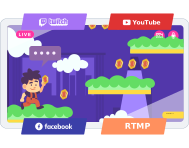
Elevate your gaming experience by recording your triumphs, strategies, and memorable gameplay moments. Share your achievements with your friends and followers on social media.
Enhance your learning journey by recording educational content, tutorials, or online classes. Review complex subjects at your own pace and grasp difficult concepts effectively.
Leverage our iOS Screen Recorder to create powerful presentations, tutorials, and product demos. Enhance productivity and communication with clients and colleagues.
Create professional tutorials, demos, and content with ease using our app's high-quality screen recordings. Capture your video editing process and share it with others to showcase your skills and expertise.
Transform your online teaching with our app's screen recording feature. Record engaging lectures, tutorials, and virtual classroom sessions to create interactive learning materials and facilitate student engagement.
Our Mac screen recorder app goes beyond just basic screen recording - it offers an interactive recording feature that takes your
Find Answers to Your iOS Screen Recorder Questions - Explore features, live streaming, annotations, and more. Enhance your recording experience today!"
An iOS Screen Recorder is a mobile application that allows you to capture and record your iPhone or iPad's screen, making it convenient for creating tutorials, gameplay videos, and more.
Our iOS Screen Recorder app offers a free trial with limited features. To access the full suite of functionalities, you can upgrade to the premium version through in-app purchases.
The free version of the iOS Screen Recorder may have time limitations for screen recording. However, the premium version allows for longer recordings without restrictions.
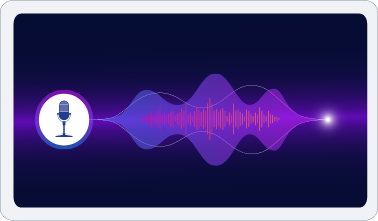
Absolutely! Both the free and premium versions of our iOS Screen Recorder come with audio recording support, enabling you to add voiceovers or background music to your videos.
Taking screenshots is straightforward with our iOS Screen Recorder. You can capture screenshots during recording or independently, preserving important moments with ease.
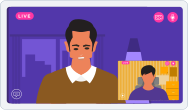
Yes, our iOS Screen Recorder allows you to record live streams and webinars, ensuring you never miss any important content.
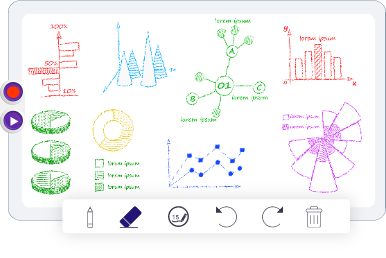
The Whiteboard Recording feature lets you capture interactive whiteboard sessions, making it beneficial for educators and professionals during presentations or lectures.